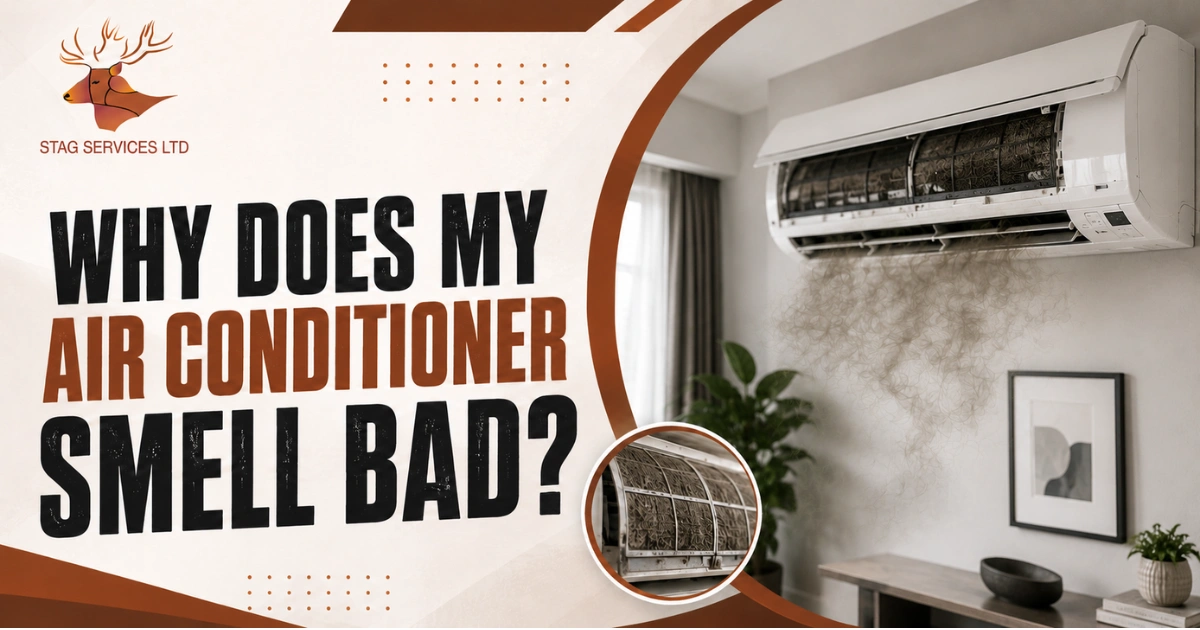
The cause of your AC’s smell completely depends on the type of odour it produces. The most common culprit is musty mould and bacteria that grow on damp evaporator coils or in the condensation pan. However, other distinct smells indicate more urgent mechanical or safety issues.
The list below details the specific causes behind the most common AC odours
Musty, Mildewy, or “Dirty Sock” Smell
This odour is usually caused by biological growth. As the AC cools your space, it pulls moisture from the air, which can sit in a dark, damp drain pan or on the coils if the system isn’t draining or drying out properly.
Burning, Gunpowder, or Hot Metal Smell
This signals overheating mechanics or an electrical issue. It can be caused by a failing fan motor, frayed wiring, or a burnt-out capacitor. We kindly ask that you turn off your system immediately and reach out to a professional.
Sweet, Chemical, or Paint Thinner Smell
This odour strongly indicates a refrigerant leak. Breathing the refrigerant in can cause headaches or dizziness. Please turn off the system and reach out to an HVAC technician as soon as possible.
Rotten Eggs or Sulphur Smell
A sulphur smell usually means there is a dead pest trapped in your ductwork or, most dangerously, a nearby natural gas leak, as gas companies add a sulphur scent to alert homeowners. Please evacuate the home immediately and contact your gas company.
General Stale or Dusty Smell
If the AC hasn’t been used in a while, it’s very common for collected dust and debris to simply burn off the heating elements or coils when the system first kicks on. This should dissipate within 30 minutes.
Why Does Your Air Conditioner Smell Bad?
If your air conditioner gives off an unpleasant smell when it’s running, don’t ignore it. Strange odours often indicate that something inside the system needs attention. While some issues are easy to fix, others require professional repair to prevent damage or poor indoor air quality.
Air Conditioners Smell Bad Because of Dirty Air Filters
Air filters collect dust, pollen, and other airborne particles. If they become clogged, bacteria and mould can develop, causing stale or musty smells whenever the system operates.
What you can do
- Examine the air filters and clean or replace them if they are dirty.
- Please arrange for regular servicing to maintain the filters in optimal condition.
An air conditioner that smells unpleasant can be due to mould or mildew inside the unit.
Moisture naturally forms inside an air conditioning system. If it doesn’t drain away properly, mould and mildew can grow on the evaporator coil or in the drain tray.
Common signs include
- The system produces a damp or musty smell every time it starts.
- The unpleasant odour becomes stronger after the unit has been switched off for a while.
- You notice reduced indoor air quality or increased allergy symptoms.
The unpleasant smell from the air conditioner is caused by a blocked condensate drain.
Your air conditioner removes moisture from the air, which flows through a condensate drain. If this drain becomes blocked, stagnant water can create unpleasant smells and may eventually cause water leaks.
You may notice
- A sour smell coming from the indoor unit.
- Water dripping around the system.
- The smell becomes worse over time.
Air Conditioners Smell Bad Because of Dust on Internal Components
If you haven’t used your air conditioner for several months, dust can settle on the internal parts. When you switch it on, the dust may produce a temporary burning smell.
If the smell disappears after a short time, it is usually nothing to worry about. However, if it continues, have the system inspected by a qualified engineer.
Sometimes air conditioners smell bad because of electrical problems.
A burning plastic or electrical smell should never be ignored. It may indicate overheating components, damaged wiring, or a failing motor.
Please turn off the system immediately if
- You notice a strong burning smell that doesn’t disappear.
- The unit makes unusual noises at the same time.
- The system trips the electrical circuit breaker.
Contact a qualified engineer before using the air conditioner again.
Unpleasant Smell From Air Conditioner Caused By Pest Activity
In rare cases, insects or small rodents may enter unused outdoor or indoor units. This can lead to unpleasant odours when the system starts to operate.
A professional inspection will identify the source and ensure the system is cleaned safely.
How to Prevent Bad Smells
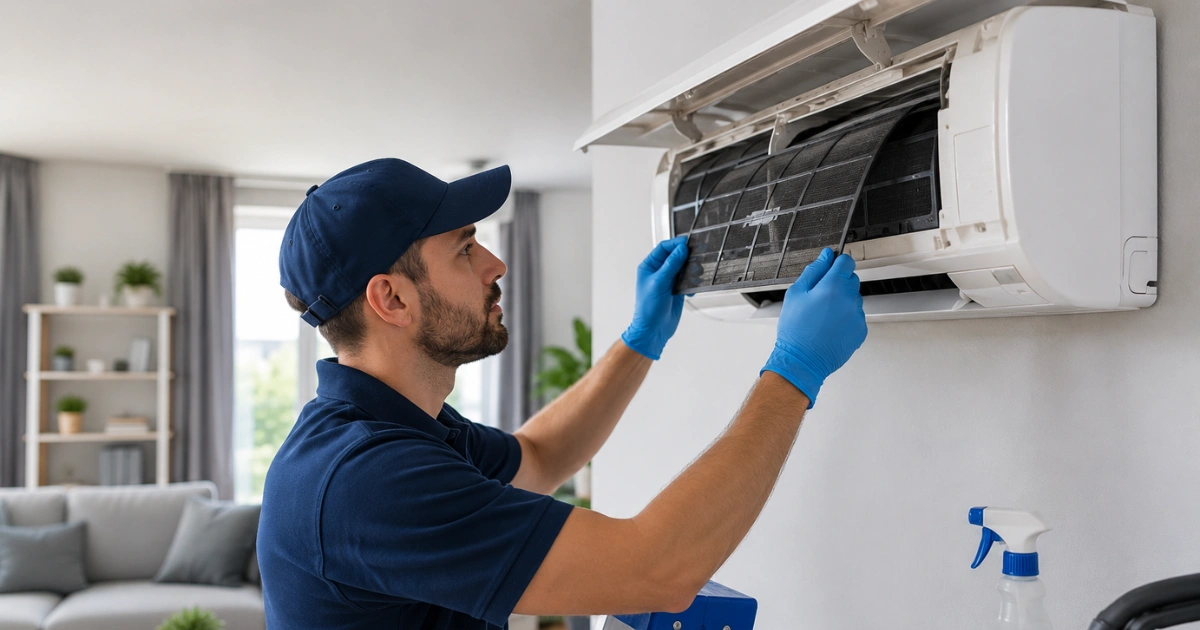
Regular maintenance is the best way to keep your air conditioning system clean and fresh.
You can reduce the risk of unpleasant odours by
- Cleaning or replacing air filters at the recommended intervals.
- Keeping the outdoor unit free from leaves and debris.
- Booking annual air conditioning servicing.
- Running the system regularly to reduce moisture build-up.
- Addressing water leaks or drainage problems as soon as they appear.
When Should You Call an Engineer?

You should arrange a professional inspection if
- The smell continues after cleaning the filters.
- You notice mould, water leaks, or poor cooling performance.
- A burning or electrical smell comes from the unit.
- The odour returns shortly after cleaning.
- Your air conditioner has not been serviced for over a year.
Final Words
A foul smell from your air conditioner is usually a sign that the system needs cleaning, maintenance, or repair. Acting quickly can improve indoor air quality, prevent more serious faults, and help your system run efficiently.
If your air conditioner smells unpleasant, Stag Services Ltd provides professional air conditioning servicing and repairs across Telford, Shropshire, Staffordshire, and the surrounding areas. Contact our experienced team today to arrange an inspection and keep your system operating safely and efficiently.