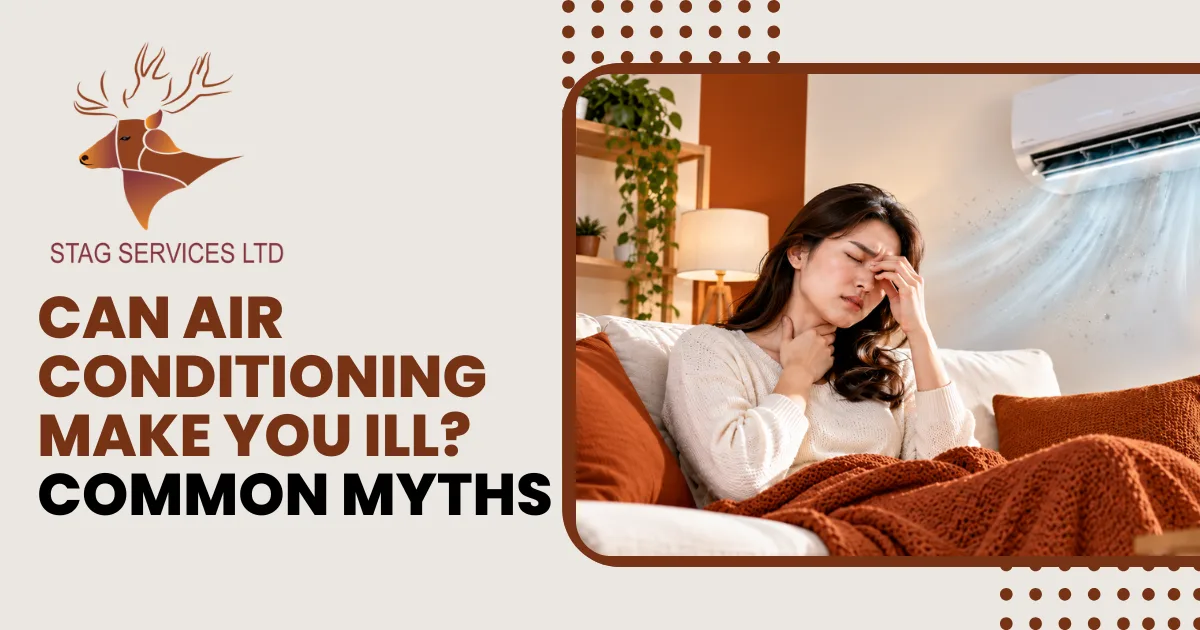
Yes, air conditioning can contribute to symptoms such as a dry throat, irritated eyes, headaches and breathing discomfort, but it does not automatically make you ill. Problems are more likely when filters are dirty, the system is poorly maintained, the air is too dry or the temperature is set too low. Poorly maintained systems can also circulate dust and other airborne particles.
Most discomfort can be reduced by keeping the system clean, setting a comfortable temperature and maintaining good ventilation.
How Can Air Conditioning Make You Feel Unwell?
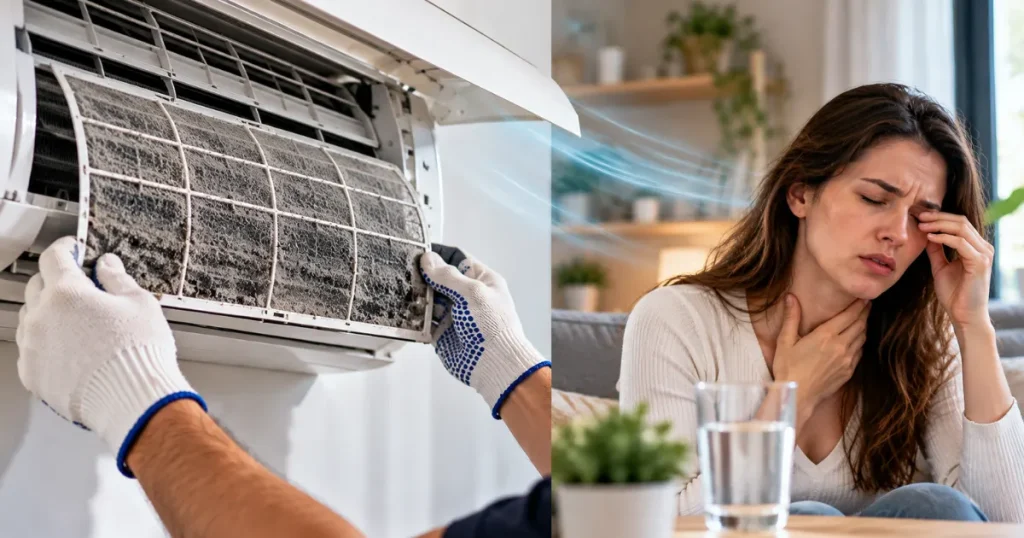
1. Dirty Air Filters
Air conditioning filters collect dust, pollen, hair and other airborne particles. When a filter becomes clogged, it can restrict airflow and reduce the system’s performance. Dirty filters may also allow more particles to circulate than a clean, properly maintained system.
People with allergies or asthma may notice more symptoms when indoor air contains dust or other irritants.
What to do: Check the filter regularly and clean or replace it according to the manufacturer’s instructions. If the system continues to produce dusty or unpleasant air, arrange a professional inspection.
2. Dry Air and Throat Irritation
Air conditioning removes some moisture from the air as it cools a room. If indoor humidity becomes too low, you may experience a dry throat, dry eyes, irritated skin or discomfort in your nose.
This does not mean that air conditioning always causes dehydration or illness. The effect depends on humidity levels, how long you spend in the room and your individual sensitivity.
What to do: Avoid setting the temperature unnecessarily low, maintain reasonable indoor humidity and drink water regularly. If the air feels excessively dry, check the room’s humidity rather than assuming the air conditioner is faulty.
3. Temperature Changes and Headaches
Moving repeatedly between hot outdoor conditions and a heavily air-conditioned room can cause discomfort for some people. Cold air blowing directly onto your face or neck may also contribute to muscle tension or make existing symptoms more noticeable.
However, there is no need to avoid air conditioning simply because the weather is hot. The aim is to maintain a comfortable temperature without creating an extreme difference between indoor and outdoor conditions.
What to do: Set a comfortable temperature, avoid directing cold airflow straight at your body and allow time to adjust when moving between different environments.
4. Mould and Poor Indoor Air Quality
Moisture can collect around an air conditioner’s evaporator coil and condensate drainage system. If water does not drain properly, or damp components are not maintained, mould and other microbial growth may develop.
A contaminated system can contribute to unpleasant smells and may aggravate allergies or respiratory symptoms in some people.
What to do: Keep filters clean, make sure condensate drains are clear and arrange an inspection if you notice a persistent musty smell, visible mould or water leaking from the unit. Do not ignore recurring moisture problems.
5. Poor Ventilation
Most standard split air conditioners recirculate indoor air rather than bringing fresh outdoor air into the room. Cooling the air does not automatically remove all indoor pollutants or provide adequate ventilation.
If windows and doors remain closed for long periods, indoor pollutants and carbon dioxide from occupants can accumulate, particularly in crowded rooms with limited fresh-air supply.
What to do: Provide suitable ventilation through windows or a dedicated ventilation system when conditions allow. In workplaces and other occupied buildings, ventilation should match the number of people and how the space is used.
Common Myths About Air Conditioning
| Myth | What is actually true |
| Air conditioning directly causes colds and flu. | Colds and flu are caused by viruses, not cold air. However, poorly maintained systems and unsuitable indoor conditions can contribute to discomfort. |
| Air conditioning always makes allergies worse. | Clean filters can capture some airborne particles. Dirty filters and poor maintenance may worsen indoor air quality. |
| The colder the setting, the healthier the room. | Very low settings can cause discomfort and waste energy. A comfortable temperature is usually a better choice. |
| Air conditioning provides fresh air automatically. | Most standard split systems recirculate indoor air and do not replace a dedicated fresh-air supply. |
| Air conditioning removes all bacteria and viruses. | Standard filters do not remove every airborne contaminant, and ordinary air conditioning should not be treated as a complete infection-control system. |
| Air conditioning is harmful if used every day. | Regular use is generally fine when the system is correctly installed, clean and properly maintained. |
How to Use Air Conditioning Without Feeling Unwell
You can reduce the risk of discomfort by following these practical steps:
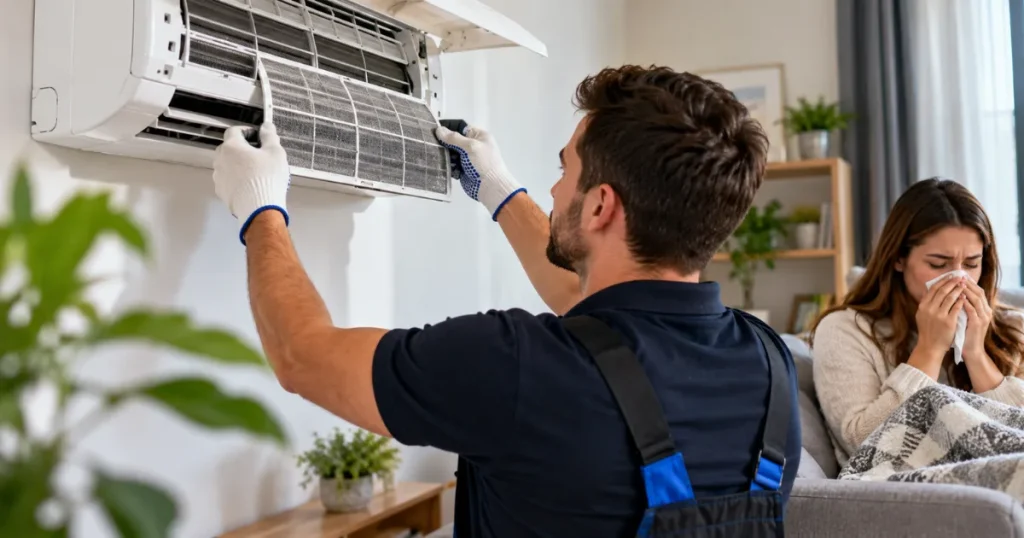
- Clean the filters regularly. Check them more often during periods of heavy use, especially in dusty environments or homes with pets.
- Choose a comfortable temperature. Avoid setting the unit much colder than necessary to cool the room.
- Avoid direct cold airflow. Adjust the louvres so that cold air is not constantly blowing onto your face or body.
- Keep the drainage system clear. Blocked drains can cause leaks and leave unwanted moisture inside the unit.
- Maintain good ventilation. Use suitable fresh-air ventilation, particularly in occupied rooms that remain closed for long periods.
- Arrange regular servicing. A professional can inspect the filters, coils, drainage, airflow and general operation of the system.
- Investigate unusual smells or noises. Persistent musty smells, water leaks or changes in performance may indicate a maintenance problem.
When Should You Get Your Air Conditioning System Checked?
Arrange a professional inspection if your air conditioner produces a persistent musty smell, leaks water, has visibly contaminated components or continues to provide poor airflow after you have checked the filter.
You should also get the system checked if it repeatedly causes noticeable irritation while running, particularly when other people using the same room experience similar symptoms. A technician can inspect the equipment, although symptoms may also have causes unrelated to the air conditioner.
If you experience severe breathing difficulty, chest pain or a serious allergic reaction, seek urgent medical help rather than assuming the air conditioning system is responsible.
Can Regular Air Conditioning Servicing Help Prevent These Problems?
Yes. Regular servicing can help prevent several problems associated with poor air conditioning maintenance. A technician can inspect and clean relevant components, check airflow and drainage, identify signs of mould or moisture problems, and check that the system is operating correctly.
The required service frequency depends on the equipment, how often it runs and the manufacturer’s recommendations. Homes with heavy usage and commercial premises with longer operating hours may need more frequent attention.
Servicing cannot guarantee that an air conditioner will never cause discomfort, but it helps keep the equipment clean, effective and in good working order.