Putting in air conditioning is more than just putting a unit on a wall. It requires safe power, correct drainage, and proper building integration. Telford homeowners, Shrewsbury business owners, and Staffordshire landlords want proper installations from the outset. Mistakes cause water leaks, increased bills, and safety issues.
Electrical Safety & Building Regulations (Part P)
Power is the backbone of every air conditioning installation. The system must have a safe electrical supply that meets national standards.
- In the UK, work must follow BS 7671 wiring regulations.
- Domestic jobs fall under Building Regulations Part P.
- A dedicated circuit is often needed for air conditioning. Shared lines can easily overload.
- Old homes may need a fuse box upgrade for AC units before installation can begin.
Common mistake: Some homeowners try DIY wiring. Without compliance, the system is unsafe, and insurance may be invalid. Always use qualified electricians to sign off the work.
Expert tip: A pro should inspect the electrical supply before installing any AC unit. This saves delays and unforeseen costs.
When TM44 Inspections Are Required (Over 12 kW Systems)
For larger offices, gyms, and commercial spaces, there are extra legal requirements. UK law requires TM44 tests every five years for cooling loads over 12 kW.
This guideline ensures system safety, energy savings, and efficiency. Small businesses in Cannock and landlords with multi-unit properties should not skip this. Doing so can result in fines and increased running costs.
Planning Permission: Do You Need It?
Most homes in Shropshire and Staffordshire don’t need planning permission for air conditioning. But there are exceptions:
- Flats and apartments often require landlord approval.
- Listed buildings and conservation areas may need council consent.
- Outdoor condenser placement rules in the UK are important. Units matter, especially if they are near property lines or visible from the street.
- Councils may also consider safe outdoor unit clearances and noise levels.
Real-life example: A Much Wenlock homeowner needed a front-wall condenser. The council required it to be moved to the side of the property to meet noise and appearance rules.
Installing Drainage Correctly — Avoid Leaks and Damage
Every unit produces water as it cools. Drainage issues cause mould, moist walls, and floor damage. Correct air conditioner condensate drainage is crucial.
- Use a gravity drain if the pipe can slope downward.
- Where gravity is not possible, fit a condensate pump.
- Insulate all pipes to avoid leaks and freezing.
Common mistake: Without slope, drain pipes run too far. This causes standing water and smells. Proper condensate drainage planning and compliance prevents costly repairs.
Installation Logistics: Wiring, Brackets, Access Holes
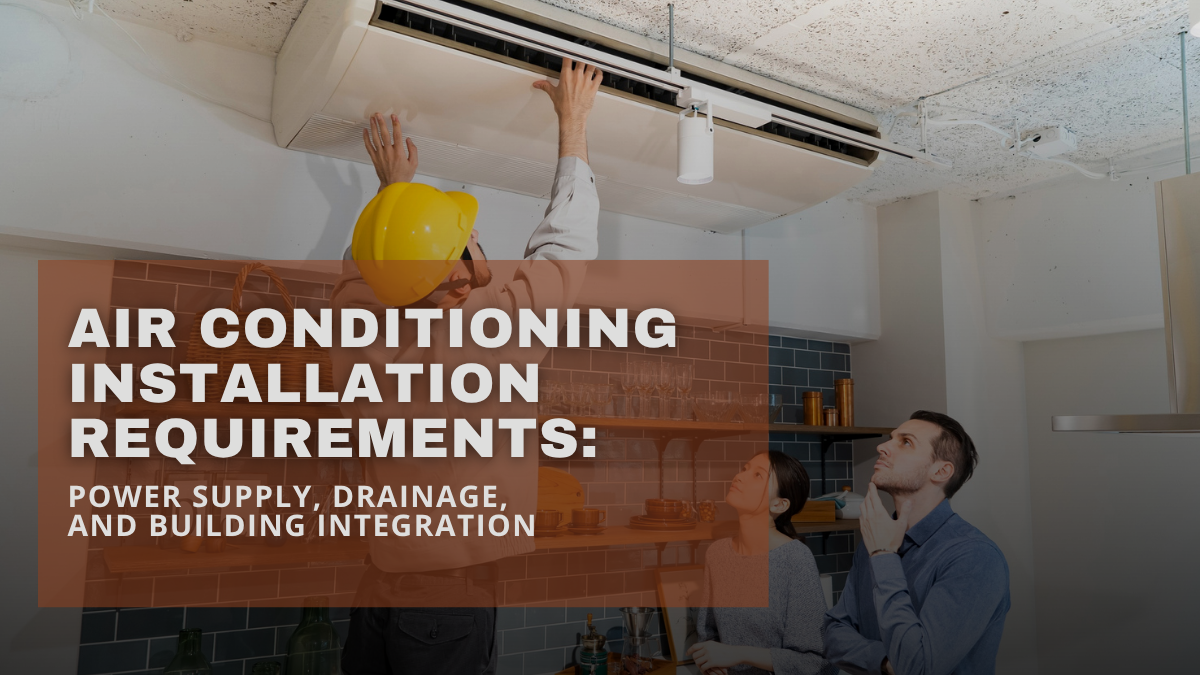
Fitting a unit is more than drilling a hole. Proper building integration means every step is done to standard:
- Pipework and bracket installation for AC must be secure and vibration-free.
- Indoor unit installation checklist:
- Check wall height
- Ensure clearance
- Verify access for filter cleaning
- Outdoor brackets should be mounted on a stable base with anti-vibration pads.
- Drainage and cable runs must be sealed to stop heat loss and water ingress.
For landlords or developers, this step protects properties and avoids tenant complaints later.
How Stag Services Helps in Shropshire & Staffordshire
Getting air conditioning right means more than just picking a unit. It means meeting UK electrical standards for air conditioning. Also, it involves planning safe drainage and following UK building regulations. For families in Shrewsbury, small businesses in Stafford, and landlords in Cannock, the right steps help everyone feel safe and comfortable.
👉 If you’re unsure about power supply, drainage, or building rules, contact Stag Services. In Shropshire and Staffordshire, we offer professional surveys and installs. You can trust us to ensure peace of mind with every project.
FAQs
Do I need permission for outdoor units?
Most houses do not. Flats, listed homes, and conservation areas often require council approval for outdoor condensers.
What if my system is larger than 12 kW?
Systems over 12 kW must have a TM44 inspection requirement UK every five years. This ensures efficiency and compliance with energy laws.
Can I do electrical work myself?
No. Part P and BS 7671 must be followed for AC electrical work. Legal wiring certification requires licensed electricians.
How do I avoid drainage problems?
Consider a natural slope or pump. Bad drainage causes mould, leaks, and property damage.